
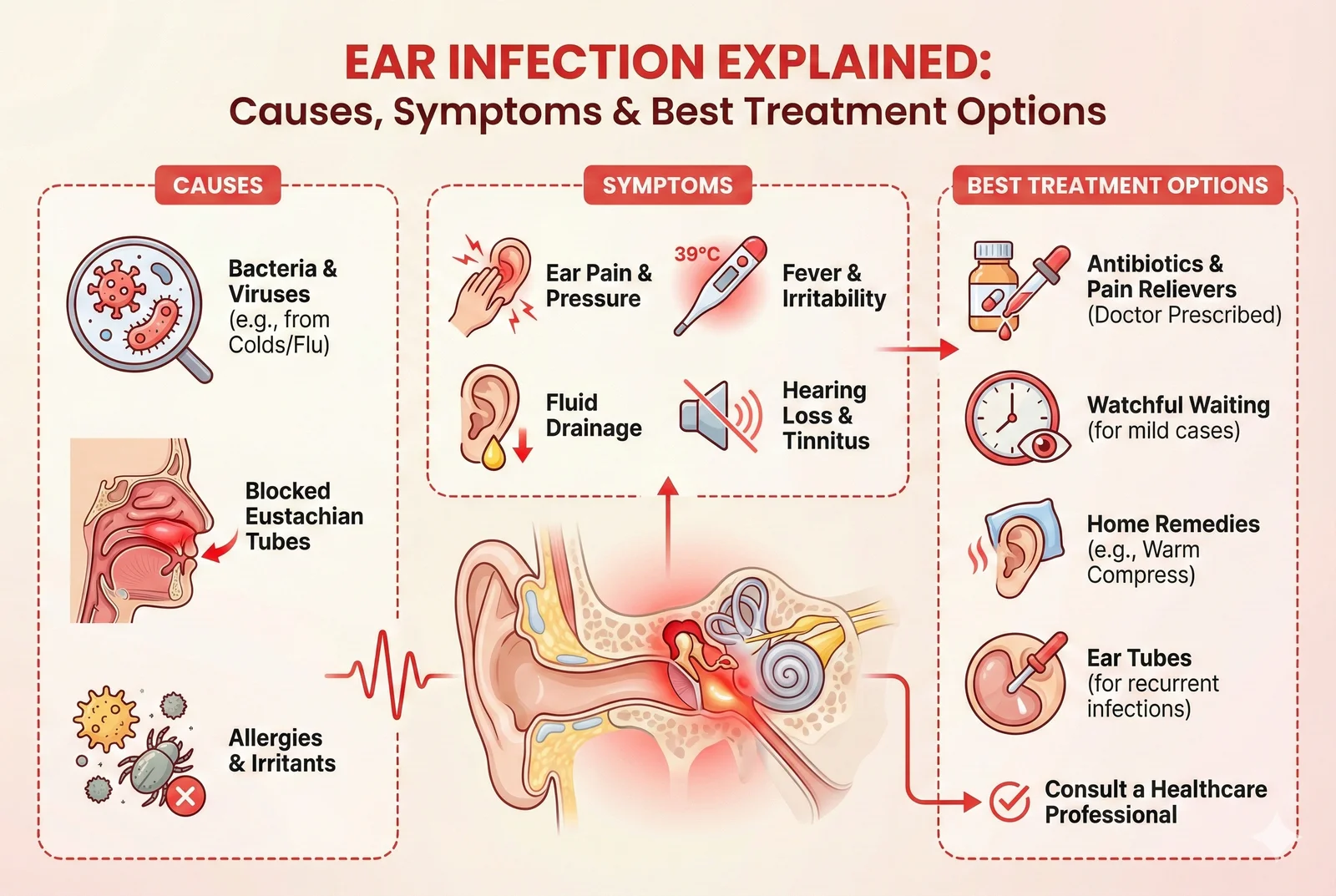
Ear Infection Explained: Causes, Symptoms & Best Treatment Options
Ear infections are one of the most common reasons people, especially children, visit the doctor every year. While often minor and self resolving, they can be painful, disrupt daily life and, if ignored, potentially lead to more serious complications, including hearing issues.
This guide will thoroughly explain what an ear infection is, what causes them, how to recognize the symptoms in both adults and children and outline the most effective treatment and prevention strategies available today. Understanding the dynamics of an ear infection is the first step toward early diagnosis and treatment, which is crucial for a swift recovery and preventing long term problems.
What Is an Ear Infection?
To understand an ear infection, it helps to first understand the magnificent, complex structure that is the human ear. The ear is divided into three main sections: the outer ear, the middle ear and the inner ear.
-
Outer Ear: This includes the visible part of the ear (pinna) and the ear canal, which tunnels down to the eardrum.
-
Middle Ear: A small, air filled space located behind the eardrum. It contains three tiny bones (ossicles) that transmit sound vibrations to the inner ear. This space connects to the back of the throat via the Eustachian tube, which manages pressure equalization and drainage.
-
Inner Ear: This houses the cochlea (responsible for hearing) and the vestibular system (responsible for balance).
An ear infection is essentially inflammation and/or infection, usually caused by bacteria or viruses, occurring in any of these three areas. The location of the infection dictates its type and severity.
Types of Ear Infections
The term ear infection is broad. A physician or audiologist will pinpoint the infection to one of three specific types:
Otitis Externa (Outer Ear Infection)
Often called Swimmer Ear, this is an infection of the ear canal (the tube running from the opening of the ear to the eardrum). It typically occurs when water remains in the ear canal after swimming, creating a moist environment perfect for bacteria or fungi to grow. It is usually characterized by pain when tugging the outer ear or when chewing.
Otitis Media (Middle Ear Infection)
This is the most common type, especially in children and is usually the result of a cold, flu, or allergy. When the Eustachian tube swells or becomes blocked, fluid and mucus cannot drain from the middle ear. This buildup of trapped fluid becomes a breeding ground for germs.
-
Acute Otitis Media (AOM): A sudden, painful infection with rapid onset.
-
Otitis Media with Effusion (OME): Fluid remains in the middle ear after an infection has cleared, or without any noticeable infection symptoms.
-
Chronic Suppurative Otitis Media (CSOM): A persistent, ongoing middle ear infection often associated with a hole (perforation) in the eardrum and continuous drainage.
Inner Ear Infection (Labyrinthitis)
This is actually an inflammation of the structures of the inner ear, usually the labyrinth or the vestibular nerve. While it can sometimes be caused by a virus or bacteria, it is less common than middle or outer ear infections. Labyrinthitis primarily affects balance and hearing, causing symptoms like dizziness (vertigo), nausea and tinnitus (ringing in the ears).
Common Causes of Ear Infections
Identifying the specific trigger is vital for effective treatment. While the immediate cause is always a pathogen (bacteria or virus), several factors create the conditions for infection to take hold.
1. Bacterial or Viral Infections
The vast majority of middle ear infections follow a common cold, the flu, or a throat infection. The germs from the nose and throat travel up the connected Eustachian tube into the middle ear. Viruses, such as those causing the common cold, are frequently the initial culprits, but often, bacteria move in afterwards to cause a secondary, painful infection.
2. Allergies
Seasonal or chronic allergies can lead to significant sinus congestion and inflammation in the upper respiratory tract. This swelling can block the Eustachian tubes, preventing the normal drainage of fluid and pressure equalization. This trapped fluid can quickly become infected.
3. Excess Earwax
Earwax (cerumen) is a natural, protective substance. However, a significant blockage or impaction of earwax can trap moisture and debris in the ear canal, creating an environment where bacteria can multiply, potentially leading to an outer ear infection.
4. Water Trapped in the Ear (Swimmer Ear)
As mentioned with Otitis Externa, exposure to water, from swimming, showering, or bathing, can wash away the protective lining of the ear canal. If water remains trapped, it softens the skin and provides the ideal moist environment for bacteria (often Pseudomonas aeruginosa) or fungi to flourish.
5. Smoking or Exposure to Smoke
Exposure to both firsthand and secondhand smoke significantly raises the risk of middle ear infections, particularly in children. Smoke irritates the Eustachian tube and the lining of the middle ear, interfering with its normal function and making it harder for the body to fight off pathogens.
6. Poor Ear Hygiene or Use of Cotton Swabs
The ear is naturally self cleaning, and using cotton swabs or other tools inside the ear canal is a major risk factor. These tools can scratch the delicate skin of the ear canal, making it vulnerable to infection, or worse, push earwax and debris deeper toward the eardrum, leading to a blockage.
Early Symptoms of an Ear Infection
Symptoms can vary based on the location of the infection (outer, middle, or inner ear) and the age of the patient (adult or child). It’s important to recognize the subtle differences.
Common Signs in Adults
Adults are usually able to clearly articulate their discomfort:
-
Ear pain (otalgia) or discomfort: This can range from a dull ache to sharp, stabbing pain.
-
Fullness or blockage sensation: A feeling that the ear is plugged or muffled.
-
Reduced hearing: Sound may seem distant or quiet, often due to fluid buildup behind the eardrum.
-
Fluid discharge (otorrhea): Clear, yellow, or even bloody fluid may drain from the ear. This can sometimes indicate a ruptured eardrum.
-
Fever (sometimes): While less common than in children, a low grade fever can accompany the infection.
Symptoms in Children
Infants and toddlers cannot verbalize their pain, so parents must watch for behavioral cues:
-
Tugging or pulling at the ear: This is the most classic sign, though it can also be a normal behavior in infants.
-
Irritability or crying: Unexplained fussiness, especially when lying down (which can increase pressure in the ear).
-
Difficulty sleeping: Pain often worsens when lying flat.
-
Loss of balance: Clumsiness or difficulty walking normally.
-
Poor appetite: Chewing and swallowing can be painful, and pressure changes may cause discomfort.
-
Unresponsiveness to quiet sounds: The child may not react when spoken to softly.
Get Expert Help for Ear Infections
When Should You See a Doctor?
While many minor ear infections, especially those caused by viruses, can resolve on their own, prompt medical attention is necessary in certain cases to prevent complications and manage pain.
Seek medical advice if:
-
Severe or persistent pain: Pain that is intense, wakes you up at night, or does not improve with over the counter pain relievers.
-
Symptoms lasting more than 48 hours: Infections that drag on often require intervention.
-
Hearing loss for more than a few days: Persistent reduced hearing can indicate significant fluid buildup.
-
Fluid or pus coming from the ear: Drainage, especially if it is thick, yellow, green, or bloody, requires a professional exam.
-
High fever in children: A temperature of 102°F (38.9°C) or higher suggests a potentially serious infection.
-
Dizziness (vertigo) or sudden, severe unsteadiness: This may indicate an inner ear issue (Labyrinthitis), which requires immediate evaluation.
Best Treatment Options for Ear Infections
Treatment strategies depend entirely on the type, location and severity of the infection and whether it is bacterial or viral.
1. Antibiotics (When Needed)
Antibiotics are only effective against bacterial infections. They are generally prescribed for:
-
Confirmed bacterial middle ear infections.
-
Children younger than 6 months old with a middle ear infection.
-
Severe infections in children or adults.
In many cases of mild middle ear infections, doctors may initially recommend “watchful waiting” for 24-48 hours, especially in older children, to see if the body’s immune system can clear the infection without antibiotics. This helps reduce unnecessary antibiotic use and the risk of antibiotic resistance.
2. Pain Relief & Home Care
Managing pain and discomfort is a key component of treatment, regardless of whether antibiotics are used.
-
Warm compress: Applying a cloth dampened with warm water to the affected ear can help soothe pain.
-
OTC pain relievers: Medications like ibuprofen (anti inflammatory) or acetaminophen (pain reliever) can effectively manage pain and reduce fever. Always follow dosing instructions carefully.
-
Hydration: Staying well hydrated helps thin mucus and promotes drainage through the Eustachian tube.
3. Ear Drops for Outer Ear Infections
For Otitis Externa (Swimmer Ear), treatment focuses on the ear canal:
-
Anti bacterial or anti-fungal drops: These are placed directly into the ear canal to kill the causative germ.
-
Steroid drops: May be included to reduce inflammation and swelling in the ear canal.
It is crucial never to use drops if you suspect your eardrum may be ruptured or if you have ear tubes, unless explicitly directed by a doctor.
4. Treatment for Severe or Chronic Cases
When infections are severe, recurrent, or chronic, more intensive interventions may be required:
-
Myringotomy (Ear Tube Insertion): For recurrent middle ear infections (3 or more in 6 months) or persistent fluid that causes hearing loss, an ENT specialist may recommend surgically inserting a tiny tube through the eardrum. These tubes drain fluid and equalize pressure, drastically reducing infection frequency.
-
Suction cleaning by audiologist/ENT: For excessive earwax or debris complicating an outer ear infection, a professional may use specialized suction devices or instruments to safely clear the ear canal.
Can Ear Infections Affect Hearing?
Yes, one of the most concerning and common effects of an ear infection is a change in hearing.
Temporary Hearing Loss Due to Fluid Buildup
In middle ear infections (Otitis Media), the fluid behind the eardrum acts as a barrier, dampening the sound vibrations trying to reach the inner ear. This causes a temporary conductive hearing loss. Once the fluid drains or the infection clears, hearing typically returns to normal. In children, this temporary hearing loss is why they may struggle to follow conversations or instructions at school.
Recurrent Infections Can Damage the Eardrum or Middle Ear Bones
Chronic or repeated infections pose a greater risk. The persistent pressure from fluid, or the repeated inflammation, can potentially:
-
Rupture the eardrum (perforation): A small hole can form, which usually heals but may require repair if it doesn’t.
-
Damage the ossicles: The delicate middle ear bones can be damaged or eroded, leading to a permanent, though often treatable, hearing loss.
When to Consider a Hearing Test (Audiometry)
If hearing loss persists for more than 6-8 weeks after an ear infection has cleared, or if a child has recurrent infections, a full hearing evaluation (audiometry) should be scheduled to assess for any lasting damage or chronic fluid accumulation.
Prevention Tips for Ear Infections
Taking proactive steps can significantly reduce the frequency and severity of ear infections.
-
Avoid using cotton buds inside the ear: Never insert anything smaller than your elbow into your ear canal. Clean the outer ear gently with a washcloth.
-
Dry ears after swimming: Tilt your head and gently shake it to help water drain. You can use a towel on the outer ear or, under a doctor recommendation, use over the counter drying drops.
-
Manage allergies: Controlling nasal congestion and sinus inflammation is key to keeping the Eustachian tubes open. Use antihistamines or nasal sprays as advised by your doctor.
-
Stay away from smoke exposure: This is one of the most critical prevention steps, especially for children.
-
Practice proper ear hygiene: Wash hands frequently and avoid touching the nose, mouth and eyes to prevent the spread of cold and flu viruses.
Ear Infection in Children: Special Considerations
Children are the primary demographic for ear infections and their anatomy plays a significant role in their susceptibility.
Why Kids Are More Prone
The Eustachian tubes in children are shorter, narrower and more horizontal than in adults. This means it is much easier for bacteria and viruses to travel from the throat to the middle ear, and it is much harder for fluid to drain by gravity. This anatomical difference usually improves as the child grows.
Symptoms to Watch Closely
Parents must be vigilant for prolonged irritability, fever and especially a sudden disinterest in food or difficulty in daycare settings due to hearing issues.
School and Daycare Hygiene
Since most infections follow a cold, excellent hand hygiene at home and in school/daycare is the best defense against transmitting common viruses.
When Hearing Tests Are Recommended
Any child with chronic or recurrent Otitis Media should have their hearing checked regularly. Unaddressed mild hearing loss can impact speech, language and academic development during crucial formative years.
Diagnosis: How EarFit Helps
A proper diagnosis is critical for receiving the right treatment and preventing recurrence. At EarFit, our dedicated team of audiologists and ENT specialists use state of the art diagnostic tools to get a precise picture of your ear health.
-
Otoscopic exam by audiologist: A specialized instrument is used to look inside the ear canal and at the eardrum. We check for redness, swelling, pus and fluid behind the eardrum.
-
Tympanometry to check fluid buildup: This non invasive test measures how well the eardrum moves. A stiff eardrum suggests fluid is trapped in the middle ear, which is a key sign of Otitis Media.
-
Pure tone audiometry for hearing: If hearing loss is suspected or confirmed, a full hearing test will determine the degree and type of hearing loss, guiding the next steps.
-
Personalized treatment and guidance: Based on the results, we provide a clear diagnosis and a customized treatment plan, which may include medication, referral to an ENT for advanced procedures, or counseling on prevention techniques.
Conclusion
Ear infections are a common, painful, yet highly treatable ailment when diagnosed early. While the body can often fight off a minor infection, ignoring symptoms may lead to unnecessary pain, a prolonged illness, or serious complications like a ruptured eardrum or chronic hearing loss.
If you or your child is experiencing the warning signs of an ear infection, persistent pain, a feeling of fullness, or reduced hearing, do not delay.