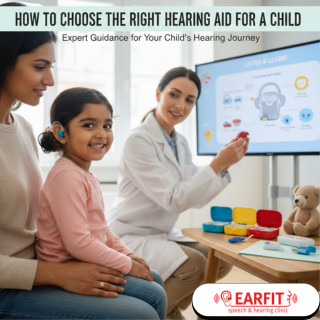
How to Choose the Right Hearing Aid for a Child
Hearing is the gateway to a child’s world. It is how they learn the melody of their parents’ voices, the nuances of language, and the social cues that help them make friends. When a child is diagnosed with hearing loss, the journey ahead can feel overwhelming for any parent. However, we live in a golden age of pediatric audiology.
Choosing the right hearing aid isn’t just about “fixing” a sensory gap; it’s about providing the essential tools for brain development. In this guide, we will walk through everything you need to know to make an informed, confident decision for your child’s future.
1. Introduction: The Power of Early Intervention
The first few years of life are a critical period for brain development. During this time, the auditory cortex, the part of the brain that processes sound, is rapidly forming connections.
Why Early Support is Non Negotiable
If a child has untreated hearing loss, the brain does not receive the stimulation it needs. This can lead to:
- Delayed Speech and Language: Children learn to speak by mimicking what they hear.
- Academic Challenges: Difficulty hearing in classrooms leads to gaps in vocabulary and reading comprehension.
- Social Isolation: If a child cannot follow a fast paced playground conversation, they may withdraw.
Choosing the right pediatric hearing aid is the bridge that connects your child to these vital experiences, ensuring they hit their developmental milestones alongside their peers.
2. Understanding Hearing Loss in Children
Before you can pick a device, you must understand the why and how of your child’s hearing profile.
2.1 Types of Hearing Loss
- Conductive: This occurs when sound cannot get through the outer or middle ear (often due to fluid, wax, or ear infections). It is sometimes temporary or surgically treatable.
- Sensorineural: This involves damage to the inner ear (cochlea) or the auditory nerve. It is usually permanent and is the type most commonly managed with hearing aids.
- Mixed: A combination of both conductive and sensorineural issues.
2.2 Degrees of Hearing Loss
Hearing loss is measured in decibels (dB) and ranges from mild to profound.
- A child with mild loss might miss soft consonants like “s” or “f.”
- A child with profound loss may only hear very loud sounds like a jet engine. The severity of the loss dictates how much “power” or “gain” the hearing aid needs to provide.
2.3 The Importance of Early Diagnosis
Most children are identified through Newborn Hearing Screenings. If a child fails a screening, it is vital to follow up with a Pediatric Audiologist. These specialists use objective tests (like ABR or OAE) that don’t require the baby to “respond,” allowing for intervention as early as a few weeks old.
3. Why Children Need Specialized Hearing Aids
You might wonder: Can’t my child just wear a smaller version of an adult hearing aid? The answer is a firm no. Children are not just small adults; their lives are messier, more active and their brains are still learning how to filter noise.
Pediatric-specific aids include:
- Tamper resistance: To prevent babies from pulling the device apart or swallowing the battery.
- LED Status Lights: So parents and teachers can see at a glance if the battery is working.
- Robustness: Built to withstand the “rough and tumble” of preschool.
4. Key Factors to Consider When Choosing
Selecting a device is a collaborative process between you and your audiologist. Here are the primary considerations:
4.1 Child’s Age
- Infants & Toddlers: Focus on comfort and security. Since their ears grow rapidly, the device must accommodate frequent earmold changes.
- Preschoolers: Durability is king. They need devices that stay put during play.
- Teenagers: Aesthetics and connectivity (Bluetooth for music and phones) become much more important for social acceptance.
4.2 Type & Degree of Hearing Loss
Your audiologist will look at the audiogram (the graph of your child’s hearing). High frequency losses require different processing than “flat” losses. The device must have enough “headroom” to be adjusted if the hearing loss changes over time.
4.3 Behind the Ear (BTE): The Gold Standard
For children, BTE models are almost always recommended over “In-the-Ear” (ITE) models.
- Growth: As the child’s ear grows, you only need to replace the plastic earmold, not the expensive electronic hearing aid.
- Safety: BTEs are larger and harder to lose or swallow.
- Power: They can house larger batteries and more powerful processors.
4.4 Comfort & Fit
A hearing aid only works if the child wears it. Custom earmolds made of soft, medical grade silicone are essential. Since children’s ears grow quickly, expect to get new earmolds every few months in the first year of life.
4.5 Safety Features
- Battery Door Locks: Crucial for preventing accidental ingestion of zinc air batteries.
- Volume Control Locks: Prevents the child (or a curious friend) from turning the volume up to dangerous levels.
4.6 Connectivity & Learning Support
Modern classrooms are noisy. To help a child hear the teacher, pediatric aids often use:
- FM Systems / ROGER Technology: The teacher wears a microphone, and their voice is beamed directly into the child’s hearing aids, cutting out background noise.
- Bluetooth: Allows the child to stream audio from tablets or computers for educational apps.
4.7 Durability & Water Resistance
Children sweat, play in sandboxes, and occasionally get caught in the rain. Look for an IP68 rating, which indicates high resistance to dust and water.
5. Pediatric Hearing Aid Technology Explained
Technology has moved far beyond simple amplification.
- Digital vs. Analog: Almost all modern aids are digital. They act like tiny computers, analyzing sound thousands of times per second.
- Noise Reduction: This helps the child focus on speech while the hearing aid “turns down” the sound of a humming air conditioner.
- Directional Microphones: These focus on the person talking in front of the child, which is vital for social interaction.
- Feedback Cancellation: This prevents that annoying “whistling” sound when a child hugs someone or puts on a hat.
6. The Role of a Pediatric Audiologist
The audiologist is your most important partner. They don’t just sell a product; they provide a clinical service.
- Real-Ear Measurements: They place a tiny microphone in the child’s ear canal to measure exactly how much sound the hearing aid is delivering.
- Fine-Tuning: Children can’t always say, “The treble is too high.” Audiologists use specialized software and behavioral observation to tune the devices.
7. Hearing Aid Brands Suitable for Children
While several brands make excellent pediatric lines (such as Phonak Sky, Oticon Play PX, or ReSound Up Smart), the brand is less important than the expertise of the person fitting it.
Pro Tip: Look for a brand that offers a wide range of colors. Allowing a child to pick “Electric Green” or “Princess Purple” earmolds gives them a sense of ownership and pride.
8. Cost of Hearing Aids for Children in India
The cost of pediatric hearing aids in India typically ranges from ₹25,000 to ₹2,50,000 per ear, depending on the technology level, brand, and features (basic, advanced, or premium digital models).
What’s Included in the Cost?
In most professional clinics, the price generally covers:
- The hearing aid device
- Custom earmold fitting
- Programming and fine-tuning
- Trial period
- Follow up visits and adjustments
- Basic service support for a specified period
Always confirm what services are included before making a decision.
Financial Assistance & Government Support in India
Parents should know that financial help may be available through:
- ADIP Scheme (Assistance to Disabled Persons for Purchase/Fitting of Aids & Appliances) by the Government of India
- State level disability welfare programs
- Health insurance policies (limited coverage in some cases)
- NGO and charitable trust support
- CSR-based hearing care initiatives
If cost feels overwhelming, speak openly with your audiologist. Many clinics guide families toward subsidies, installment options, or support programs.
Early intervention is crucial for a child’s speech and brain development, cost should never delay treatment.
9. Tips for Parents After Getting a Hearing Aid
The journey doesn’t end at the fitting; that’s where it begins.
- The “Hearing Aid Sandwich”: Start with short periods of wear during fun activities (like reading a favorite book) to build positive associations.
- Daily Checks: Use a battery tester and a listening tube to make sure the aid is functioning before the child goes to school.
- Cleanliness: Wipe away wax daily; a clogged earmold is the #1 reason for “broken” hearing aids.
- Teamwork: Ensure teachers and speech therapists know how to put the aids on and check the batteries.
10. Common Mistakes Parents Should Avoid
- Waiting for the Right Time: There is no better time than now. Delaying intervention by even six months can impact language development.
- Choosing Based on Price Alone: A cheaper aid that doesn’t have the necessary noise filtering features might lead to the child refusing to wear it because the world sounds too loud.
- Skipping Follow ups: Children’s hearing can change, and their earmolds will get loose. Regular check ups are mandatory.
11. Conclusion
Choosing a hearing aid for your child is an act of love and an investment in their limitless potential. While the technical details, frequencies, decibels, and Bluetooth protocols, are important, the goal is simple: access. By working closely with a pediatric audiologist and choosing a device designed for a child’s unique needs, you are giving your child the gift of sound and the ability to find their own voice.
Don’t wait to give your child the world. Early action is the key to a lifetime of clear communication and bright opportunities.
12. FAQs
What is the best type of hearing aid for a child?
For most children, a Behind-the-Ear (BTE) hearing aid with a custom earmold is best due to its durability, safety features and ability to accommodate growth.
At what age can a child start wearing hearing aids?
Children can be fitted with hearing aids as early as one month old. The sooner the brain receives sound, the better the outcome for speech development.
How often should a child’s hearing aid be adjusted?
In the first year, you may visit the audiologist every 2-3 months. For older children, a check up every 6 months is standard to ensure the fit and programming are still optimal.
Can children play sports with hearing aids?
Yes! With the help of hearing aid clips (which tether the aid to clothing) and sweatbands, children can play almost any sport. For high, contact sports, talk to your audiologist about protective gear.
How long do pediatric hearing aids last?
Typically, the technology lasts 3 to 5 years. After this, the child may need a more advanced processor, or the physical device may show wear and tear from an active lifestyle.