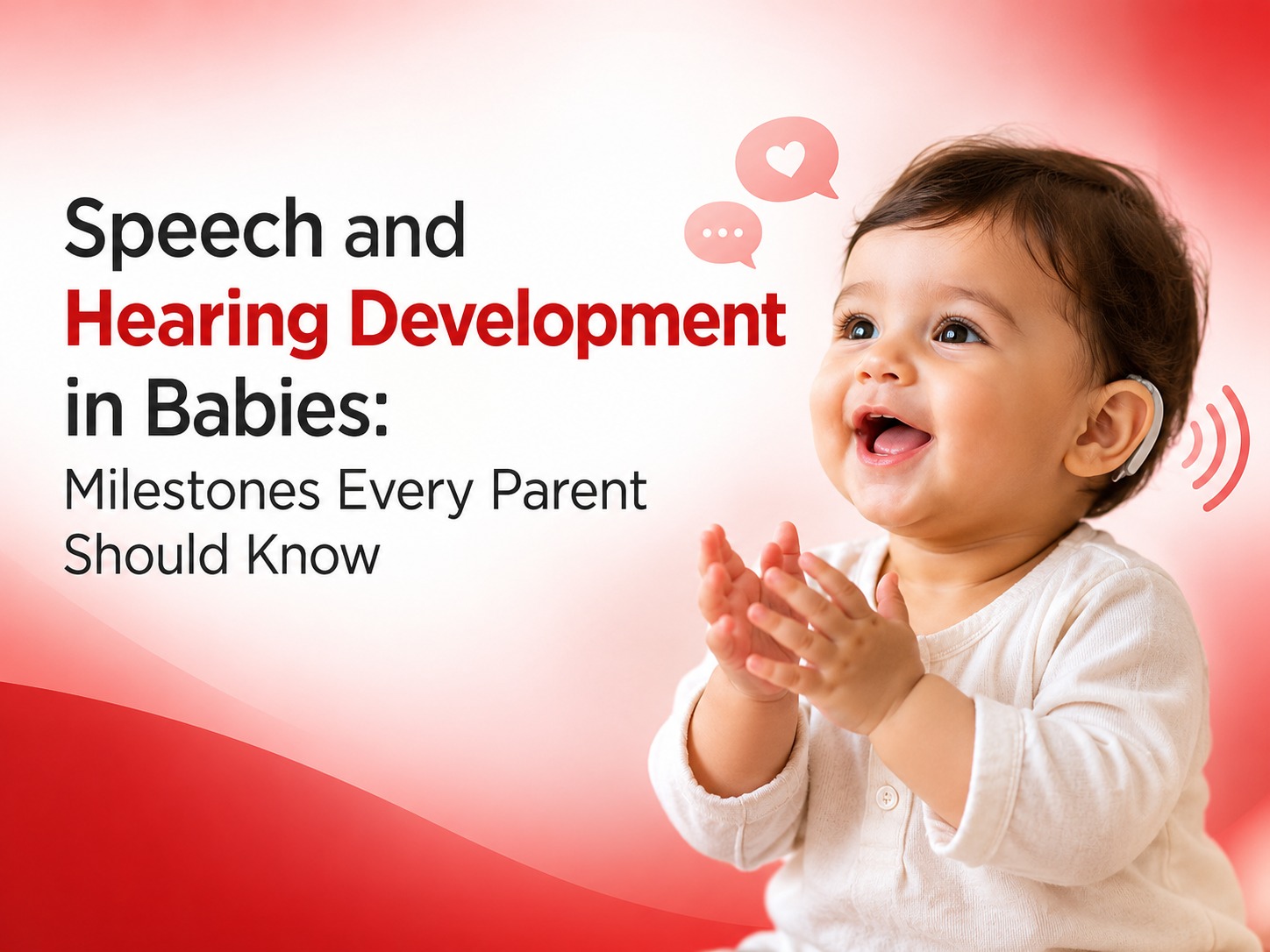
From the moment a baby is born, they begin learning to recognise sounds, listen to voices, and communicate with the people around them. Although babies cannot speak words initially, they develop important communication skills through listening, observing, making sounds, and interacting with their parents.
Speech and hearing development are closely connected. Babies need to hear sounds and speech to gradually understand language and develop their own communication skills. This is why monitoring hearing and speech milestones during early childhood is important.
Understanding what to expect at different ages can help parents recognise developmental progress and identify possible concerns early.
Why Are Speech and Hearing Development Important?
Hearing allows babies to become familiar with different sounds, voices, and patterns of speech. As they grow, they begin connecting these sounds with people, objects, and everyday activities.
Speech development involves learning how to produce sounds, understand words, and eventually communicate through spoken language.
Both skills work together to support:
- Understanding spoken language and instructions.
- Developing vocabulary and communication skills.
- Building social connections with family and others.
- Expressing needs, thoughts, and emotions.
- Preparing for learning and classroom communication.
Remember: Every child develops at their own pace. Milestones are general developmental guidelines, not strict deadlines. However, missing important milestones or having concerns about your child's hearing or communication deserves professional attention.
Speech and Hearing Milestones by Age
Babies gradually develop listening, understanding, and communication skills as they grow. The following milestones can help parents understand some common developmental patterns.
Birth to 3 Months
Hearing and listening:
- Reacts to sudden or loud sounds.
- Recognises familiar voices.
- May become quiet or calm when hearing a familiar voice.
- May respond to sounds by blinking or changing facial expressions.
Speech and communication:
- Cries to communicate needs.
- Begins making soft cooing sounds.
- Uses different cries for different needs.
- May smile or make sounds during interaction.
4 to 6 Months
Hearing and listening:
- Begins turning towards familiar sounds.
- Responds to changes in the tone of a parent's voice.
- Shows interest in music and different sounds.
- May look towards the direction of a sound.
Speech and communication:
- Begins babbling with sounds such as "ba" and "ma".
- Laughs and makes squealing sounds.
- Uses different sounds to express excitement or discomfort.
- Enjoys taking turns making sounds with caregivers.
7 to 12 Months
Hearing and listening:
- Responds to their name more consistently.
- Recognises familiar words and expressions.
- Begins responding to simple requests and familiar phrases.
- Listens attentively to conversations and sounds around them.
Speech and communication:
- Produces repeated sound combinations such as "bababa".
- Uses gestures such as waving and pointing.
- May say simple words such as "mama" or "dada".
- Uses sounds and gestures to get attention.
12 to 18 Months
Hearing and listening:
- Understands familiar words and simple instructions.
- Recognises names of familiar people and objects.
- Responds to simple questions or requests.
Speech and communication:
- Uses a few meaningful words.
- Attempts to imitate words and sounds.
- Uses gestures to communicate wants and needs.
- Begins using words to identify familiar objects.
18 to 24 Months
Hearing and listening:
- Understands more everyday words and simple questions.
- Follows familiar two-step instructions in everyday situations.
- Identifies familiar objects when named.
Speech and communication:
- Uses an increasing number of words.
- Begins combining two words, such as "more milk".
- Names familiar objects and people.
- Uses words to express basic needs.
Signs of Possible Hearing Difficulties in Babies
Some babies with hearing difficulties may not show obvious signs during their early months. Parents should observe how their child responds to everyday sounds and voices.
Possible warning signs include:
- Does not react to loud or unexpected sounds.
- Does not turn towards sounds or familiar voices.
- Does not respond consistently when called by name.
- Does not appear to recognise familiar voices.
- Shows limited progress in babbling or sound development.
- Does not seem to notice everyday sounds around them.
- Appears to hear some sounds but not others.
Important: Passing a newborn hearing screening does not guarantee that hearing difficulties will never develop. Some hearing conditions can appear later, so ongoing monitoring is important.
Signs of Speech and Language Delay
Children develop communication skills at different rates. However, certain signs may indicate that a child needs a speech and language assessment.
- Limited or no babbling during the expected developmental period.
- Does not use gestures such as pointing or waving around 12 months.
- Does not use meaningful words around 16 months.
- Does not combine two words meaningfully by 24 months.
- Has difficulty understanding simple instructions.
- Shows limited interest in communicating with others.
- Loses speech or communication skills they previously developed.
These signs do not automatically mean a child has a developmental disorder. They indicate that a professional assessment may be helpful to understand the child's communication needs.
What Can Cause Speech and Hearing Delays?
There are several possible reasons why a child may experience difficulties with speech, language, or hearing. Identifying the underlying cause is important for choosing appropriate support.
1. Hearing Loss
Children with hearing loss may find it difficult to hear speech sounds clearly. This can affect their ability to recognise words, imitate sounds, and develop spoken language.
2. Recurrent Ear Infections
Repeated middle ear infections or persistent fluid behind the eardrum can cause temporary hearing difficulties. If these problems continue, they may affect a child's access to speech sounds.
3. Developmental Differences
Some children experience differences in their overall development that affect communication, social interaction, or language learning.
4. Speech and Language Disorders
Some children may have difficulty understanding language, expressing themselves, or producing speech sounds clearly. These concerns may require assessment by a qualified speech-language professional.
5. Other Medical or Neurological Factors
Certain medical, neurological, or genetic conditions can influence a child's hearing, speech, and language development.
Why Early Hearing Screening Is Important
Early hearing screening helps identify possible hearing difficulties during infancy, sometimes before parents notice any obvious symptoms.
Identifying hearing concerns early allows families and healthcare professionals to explore suitable support and intervention options.
Early hearing assessment is important because it can help:
- Identify hearing difficulties at an early stage.
- Understand whether a child can hear speech sounds effectively.
- Support speech and language development.
- Determine whether further medical or hearing care is needed.
- Help parents make informed decisions about their child's development.
Parents should follow recommended newborn hearing screening and seek further assessment whenever concerns arise, even if the child previously passed the screening.
How Can Parents Support Speech and Hearing Development at Home?
Everyday interactions provide valuable opportunities for babies to develop listening and communication skills. Parents can support this process through simple activities.
1. Talk to Your Baby Regularly
Talk about everyday activities, describe objects, and use simple sentences. Regular interaction helps babies become familiar with speech sounds and language patterns.
2. Read Picture Books Together
Show your baby colourful picture books, name objects, and describe what you see. Reading together encourages listening and introduces new words.
3. Sing Songs and Rhymes
Simple songs and nursery rhymes expose babies to different sounds, rhythms, and speech patterns.
4. Respond to Their Sounds
When your baby babbles or makes sounds, respond with words and expressions. This encourages interaction and helps develop early communication skills.
5. Reduce Background Noise
Keep television and other background sounds low during conversations and playtime. This helps your baby focus on voices and important sounds.
6. Spend Time Face-to-Face
Maintain eye contact, smile, and use facial expressions while speaking. These interactions help babies connect sounds with communication and social cues.
When Should You Consult a Specialist?
Parents should not wait until a child starts school to address concerns about speech or hearing development.
Consider consulting a qualified professional if:
- Your baby does not respond to everyday sounds.
- Your child has not passed a newborn hearing screening.
- Your child shows signs of delayed speech or language development.
- Your child has repeated ear infections.
- Your child frequently misunderstands spoken instructions.
- Your child loses communication skills they previously had.
A hearing assessment may help identify hearing-related concerns. A speech-language assessment can evaluate your child's communication skills and determine whether additional support is appropriate.
Do not delay assessment if your child loses previously acquired speech, language, or other developmental skills. Seek prompt professional evaluation.
The Importance of Early Intervention
Early intervention focuses on identifying developmental concerns and providing appropriate support during a child's early years.
Depending on the assessment results, support may include hearing care, speech and language therapy, medical treatment, or other developmental services.
Early support can help children build communication skills, improve their ability to interact with others, and participate more confidently in everyday activities.
Parents also play an important role by following professional recommendations and encouraging communication through regular interaction at home.
Give Your Child the Best Start with Earfit
Speech and hearing development are important parts of a child's early growth. Understanding developmental milestones and recognising possible warning signs can help parents take timely action.
If you have concerns about your child's hearing or communication development, a professional assessment can help you understand what support may be needed.
At Earfit Speech & Hearing Clinic, we focus on hearing assessment and hearing care to help individuals and families understand their hearing needs. Early attention to hearing concerns can make an important difference in supporting a child's communication journey.
Disclaimer: This article is intended for general educational purposes only and does not replace professional medical advice, diagnosis, or treatment. Developmental milestones are general guidelines, and individual children may develop at different rates. Consult a qualified healthcare professional if you have concerns about your child's hearing, speech, or language development.